A Marathon Runner Runs The Race
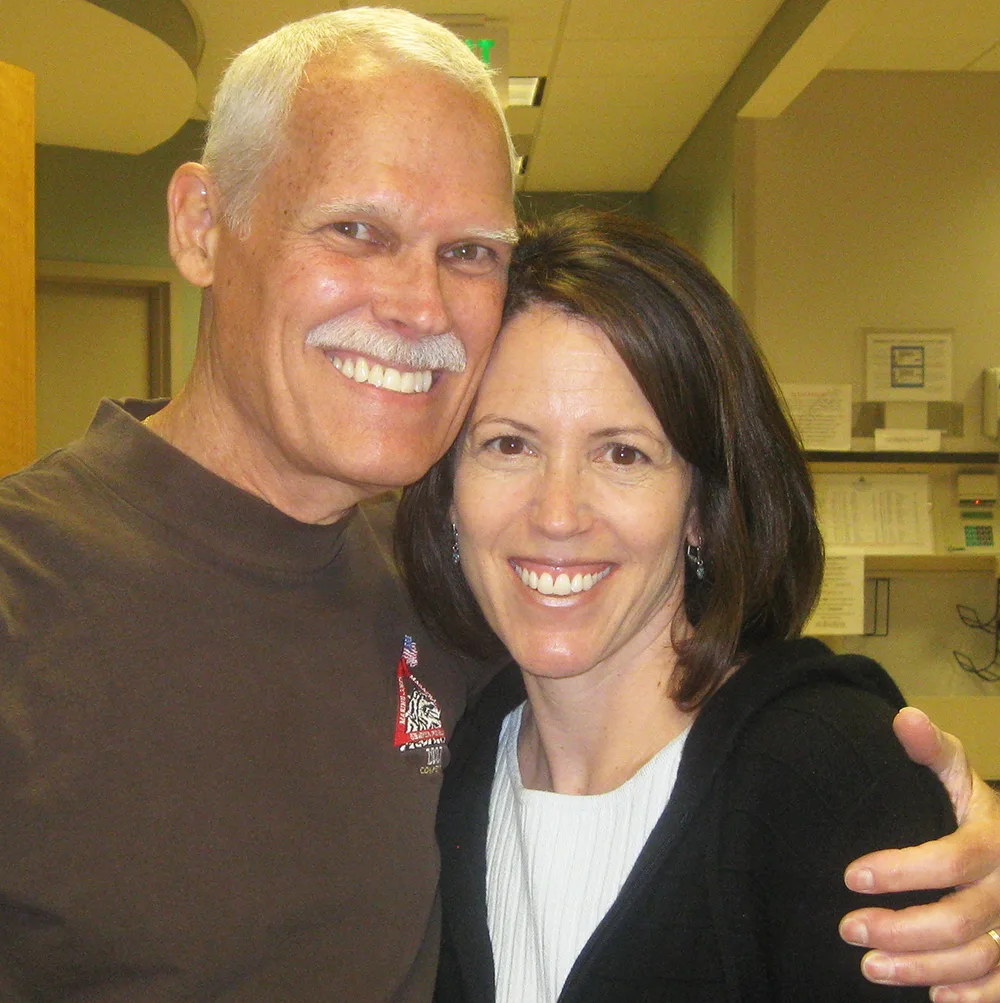
Bill Merriam fights cancer the same way he runs marathons: with a steely determination, measured perspective, laser-like focus and a positive attitude.
Listen
Transcript
My name is Bill Merriam. I’m age 63, will be 64 in July, and in, uh, June of, uh, 2009, or was it May, 2009, I was diagnosed with cholangiocarcinoma. I started marathoning, uh, running when I turned 60. I had a 30 year old son that challenged me to start running. to run marathon with him. So we did. And I kept going.
So, uh, in April of 2009, I had qualified for Boston Marathon and I ran it and I loved it. I was ready to come back and run it again. But about three weeks later, I, I felt lethargic and was quickly diagnosed with jaundice, which showed up as a tumor in my bile duct. You know, I looked at it as right from the beginning, mentally and physically the running really saved my life because when the diagnosis came, I quickly took it on and said, well, I’m just going to be running another marathon.
But it actually was really, um, very cathartic in that sense. So, so the physical pushing myself to do it, even when I was tired, was, uh, was another. Sort of mental accomplishment to say, I’m, I’m not letting this thing lick me. and keep on going It’s, it’s funny cause I’m not, I don’t feel angry. I don’t feel, I’m not an angry person, but when I was working out, it was almost like, um, there was something inside of me right in the middle of my, bile duct that I was like, get out.
You know, you don’t belong there. And I could yell at it. So it, it really released a lot of, um, a lot of tension. And I’m sure I was. You know, angry at getting the disease and all that. So, um, it, it provided a great release when you’re running 26 miles, it’s as much a mental conditioning as it is physical, that you really do have to, um, think it through or, the physical might overcome because you’re, your body’s screaming to stop.
So mentally you just got to say, no, no, you got, you know, another hour and you’re going to be there and this is what you wanted to do. And, and you actually do, it sounds perverse, but you actually do enjoy it. I mean, at the end of it, you really feel a sense of enjoyment and of course, complete accomplishment.
So, so the disease is going to bend like that for me too. It’s like, okay, I’m going to get through this. Life’s going to go on. I’m going to be running marathons again. And, you know, be around to see my 10 grand children and my six kids all grow up to be, you know, productive citizens and, and enjoy, enjoy every day for what it, what it brings.