A Runner Builds A Running Organization
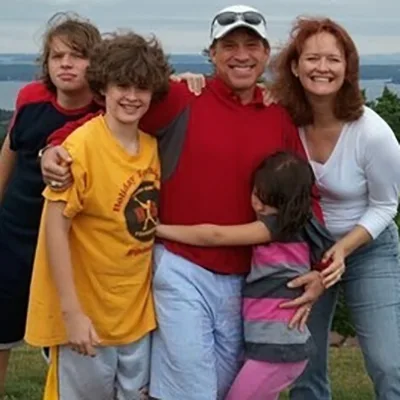
Kevin Stenstrom was a marathon runner and a Naval Flight officer who, during a routine physical, was diagnosed with melanoma. After several surgeries and months of cancer therapy, Kevin founded team Miles 4 Melanoma, a program that provides runners with coaching and individual training plans, all the while raising money to support the Melanoma Research Foundation.
Listen
Transcript
I’m Kevin Stenstrom. I’m a stage three melanoma survivor, and I also say patient because I’ve had two reoccurrences. And once a melanoma patient, always a melanoma patient. So I was diagnosed in the fall of 2000. I had a mole on my shin. My wife wanted to have it looked at. It was melanoma. But I I think millions of others, did not know the severity of what melanoma could do.
My oncologist started telling me about melanoma can kill, there is no cure for it, and if we have not found any disease in five years, that still doesn’t mean you’re cancer free. So my wife actually helped save my life. I’ve been running ever since college. It was always my stress reliever, even before I had cancer, and it certainly has become a stress reliever since then. It’s a way of saying, this is not going to get to me, I’m going to return to my normal self, and if I can run, I’m healthy. Now that’s not necessarily true, but it put me in a much better spiritual and mental and psychological state of mind. than if I did nothing. Around the time that I had my first reoccurrence, I was training for a marathon, and I was raising money for Leukemia and Lymphoma Society, because my dad had leukemia. And I couldn’t do the race. I’d already raised the money. So my wife pinch walked for me. And she’s the one who said, I wonder if there’s anything like this for melanoma. So she did a lot of research on the web, found nothing. So she and I co founded in 2007, 2008, our own team called Team Miles for Melanoma. We partnered with the Melanoma Research Foundation. We started recruiting people to run, train them, coach them. In that team atmosphere for the half marathon or a marathon, we go to specific races as a team. You have coaches there and they raise money from melanoma research. And in the first three seasons, we’ve raised 350, 000.
We have beginners. We have people that have run more marathons than I have. We have people who are in their twenties. We have people who are in their seventies. It’s been a way for me to give back. It’s been a way for other people to get involved and people who. have had friends and family who have died from the disease, a way for them to support the research.
And so other people do not have to deal with what I, and I’ve been one of the lucky ones cause I’m still here. I have to deal with, which is a deadly disease. Running has been a salvation for me to psychologically battle back this disease. And I use sunscreen, I usually am in long sleeve shirts, I run early in the mornings before the sun gets too bright.
Unless someone tells me that it’s going to increase my chances of getting melanoma, then I’m not going to stop.