A Trip to Colontown
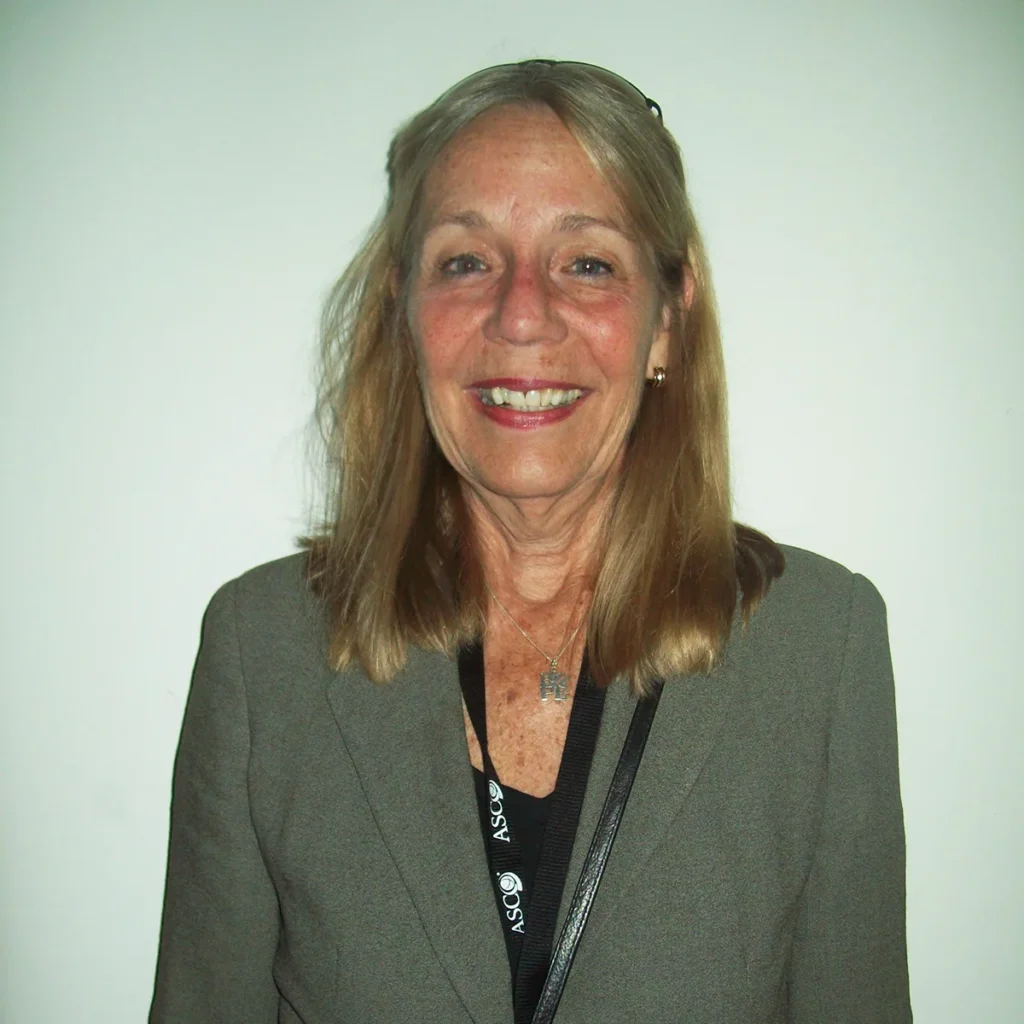
Erika was diagnosed with colon cancer in 2002. Now she’s the mayor (and founder) of Colontown, a non-profit organization that serves as a social network for people fighting colon cancer. Or, as Erika calls it, “the face and the place for colorectal cancer survivorship”.
Listen
Transcript
I am Erica, and I’m a survivor, almost 10 years, of stage 3C colon cancer. A few years ago, not even two years ago, I founded a place for survivorship for colorectal cancer patients and survivors called Colontown. And I like to call Colontown the face and the place for colorectal cancer survivorship.
I like to think of myself as a student of survivorship and one of the things I would like to learn is what makes some people survive and others not. That’s where my student apprenticeship comes in. is focused upon that concept. I haven’t found an answer yet, but I’m going to persist in looking for as long as I possibly can based upon the numbers of people that I meet who are the survivors and patients of colorectal cancers.
Colontown is a magical place where people feel comfortable and at home with other survivors and patients and care partners. The common cause, obviously, is survivorship from the devastation, the possible devastation of colorectal cancers. All stages, all genders. The phenomenon of Colon Town is, and a surprise to many, is the fact that That so many of the people that are what we call colon townies are young.
A lot of them are Lynch Syndrome folks who have developed the disease early on in their lives because of the genetic predisposition that they have inherited from their ancestors. So they come together online to begin with. We’re both in a secret group on Facebook, which is where our initial platform for connection is.
It isn’t easy to find Colontown, or Colontownies, prefer it that way. They like to have their own secret clubhouse, if you will, where they go and share the intimate details, oftentimes intimate details of their disease and their recovery. they share referrals they share so much material, it’s fabulous and one of my theories that I have developed as a result of doing this work and it’s my observation that people that reach out in support of others tend to live longer and I’m not sure whether that is because They feel better because they’re helping others.
I’m not sure whether it’s because they’ve learned more, because of their continuing interest. I know that I have a continuing interest in learning as much as I can about my disease, so that I might pass it on to somebody else. Or more selfishly, should I ever encounter a relapse, or a revisit to colorectal cancer, I will.
No more than I did when I was first diagnosed. When I went through the experience, I had no one to talk with. Not one person in my network, which is a vast network, knew anything about the colorectal cancer, either colon or rectal cancer. No one understood. And no one had a clue what that was. treatment was about or what I could expect. A lot of people thought I was going to die.
My very own husband, who I divorced, told me I was going die, which wasn’t very encouraging. So I had a pretty rough time. I had rough treatment, and I was very depressed, and I had no one to speak with about this. No one understood. It became Apparent to me, as I started to recover from the cancer and the treatment, that it would be really important, it is important, that people have a place to go to lay out on the table what it is and find out what other people have done.
my own experience with Witnessing all the conversations on Collontown, because I’m on it all the time, is that people are forever saying, oh, I’m so grateful for Collontown. I don’t know what I would do without Collontown. I’ve met all my peeps here in Collontown. people get together in different cities.
Based on their connection that they have made through Collontown. That makes me feel very good. It needed to happen and I feel that Collontown is providing a very much needed service. By just being around and available for colorectal cancer people. I’m all about having an enhanced, rich life today. I like to tell people that prior to my diagnosis, my life was shamelessly self serving and self focused and shallow.
and people find it relatively strange when I say my life is so much better as a direct result of my experience with cancer. It is. I know I’ve had an experience that I can share with people and I belong to a community where my street credibility is real because I’ve been there, done that, and I’ve survived.
I today have almost 10 years survival. No evidence of disease survival post my diagnosis for that I’m extraordinarily grateful. So I would say that gratitude, It makes me feel good and reaching out in support of somebody else with some important information for them where they smile and feel better or maybe take some action that helps them in their survival pathway is enormously gratifying.
And I know that I belong and that I have helped somebody. What’s not to like about that feeling? I’m just so extraordinarily grateful to be alive to be able to do this work.